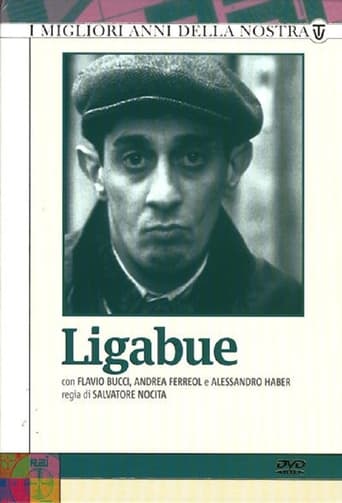
"Ligabue" (1977) is a poignant Italian television film produced by RAI that delves into the tumultuous life of the eccentric and misunderstood artist Antonio Ligabue. Directed by Salvatore Nocita, the film captures the essence of Ligabue's struggles with mental illness and societal rejection, while also celebrating his raw talent and unique artistic vision. The narrative unfolds through a series of flashbacks and present-day scenes, offering viewers a comprehensive look at the artist's journey from obscurity to posthumous recognition. The film's protagonist, portrayed with intense emotion by Flavio Bucci, embodies the contradictions of Ligabue's character: a man tormented by his inner demons yet driven by an insatiable passion for painting. Bucci's performance is both haunting and captivating, effectively conveying the artist's isolation and his desperate need for acceptance. The film does not shy away from depicting the harsh realities of Ligabue's life, including his time spent in psychiatric hospitals and the constant battle against poverty and ridicule. "Ligabue" also excels in its visual storytelling, with cinematography that mirrors the artist's chaotic yet vibrant world. The use of color and light in the film reflects the intensity of Ligabue's paintings, drawing parallels between his art and his psyche. The rural landscapes of Italy serve as a backdrop that both confines and inspires Ligabue, highlighting the tension between his environment and his inner world. Overall, "Ligabue" (1977) stands as a testament to the enduring spirit of an artist who, despite facing immense adversity, left an indelible mark on the world of art. The film not only honors Antonio Ligabue's legacy but also serves as a powerful reminder of the human capacity to create beauty amidst suffering. Through its compelling narrative and striking visuals, "Ligabue" offers a moving portrayal of a man whose life was as extraordinary as his art.
Año1977
Número de episodios3
Número de temporadas1
Duración del episodio65
EstadoEnded
GénerosDrama
Países de producciónItaly