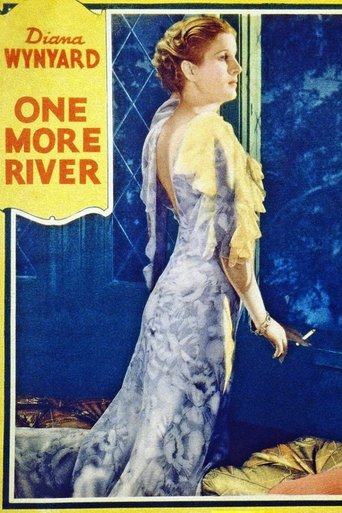
She was condemned by a world that could not understand!
"One More River," released in 1934 by Universal Pictures, is a poignant cinematic adaptation of John Galsworthy's novel "Over the River." Directed by James Whale, the film delves into the complexities of marriage, societal expectations, and personal freedom. Set against the backdrop of 1930s England, the story follows Lady Clare Corven, portrayed by the luminous Diana Wynyard, as she seeks a divorce from her abusive husband, Sir Gerald Corven, played with chilling intensity by Colin Clive. The film's narrative is a compelling exploration of a woman's struggle for independence and dignity in a time when such pursuits were fraught with societal condemnation. The film's strength lies in its nuanced performances and the atmospheric direction by James Whale, who masterfully captures the tension and emotional undercurrents of the story. Diana Wynyard's portrayal of Lady Clare is both heart-wrenching and inspiring, as she navigates the treacherous waters of a public divorce and the subsequent ostracism. The supporting cast, including the ever-reliable Frank Lawton as Clare's supportive brother, and the charmingly earnest Reginald Denny as her new love interest, add depth and richness to the narrative. The film's visual style, characterized by its elegant black-and-white cinematography, enhances the emotional gravity of the story, making "One More River" a standout in the pre-Code era of Hollywood. "One More River" also stands out for its bold thematic content, addressing issues such as domestic abuse and the societal constraints on women with a rare frankness for its time. The film does not shy away from depicting the harsh realities of Lady Clare's situation, nor does it sugarcoat the societal backlash she faces. This unflinching approach to storytelling, combined with Galsworthy's insightful social commentary, makes the film a powerful statement on the need for change in gender dynamics and marital laws. The screenplay, penned by the talented team of R.C. Sherriff and Benn W. Levy, skillfully adapts Galsworthy's prose into a compelling cinematic experience that resonates with audiences even today. In the context of Universal Pictures' 1934 output, "One More River" represents a sophisticated and mature offering that showcases the studio's commitment to quality storytelling. While the film may not have achieved the commercial success of some of its contemporaries, its artistic merit and historical significance cannot be overstated. "One More River" remains a testament to the power of cinema to challenge societal norms and inspire change, making it a timeless piece of American film history.
*If our moderation approves your version, it will be replaced and you will be credited as the text author.
Year1934
Runtime88 min
GenresDrama
Production countriesUnited States of America