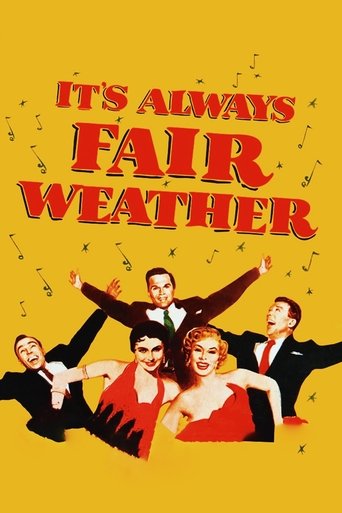
MGM's Gigantic and Joyous Musical
"It's Always Fair Weather," a 1955 cinematic gem produced by Metro-Goldwyn-Mayer, is a vibrant and satirical take on the American post-war era. Directed by the talented duo Gene Kelly and Stanley Donen, the film follows three World War II veterans who reunite ten years after the war, only to discover that their once-strong bond has frayed due to the divergent paths their lives have taken. The movie cleverly juxtaposes the optimism of their wartime camaraderie with the harsh realities of civilian life, offering a poignant commentary on the disillusionment that many faced during this period. The film's innovative use of color and choreography sets it apart from its contemporaries. With dazzling dance sequences choreographed by Gene Kelly and Michael Kidd, "It's Always Fair Weather" showcases the talents of its stars, including Kelly, Dan Dailey, and Michael Kidd. The iconic roller-skate dance through the streets of New York, set to the song "I Like Myself," is a testament to the film's creative energy and remains a highlight of mid-century musical cinema. The vibrant Technicolor palette not only enhances the visual appeal but also underscores the film's thematic exploration of the contrast between the characters' past and present lives. Beyond its visual and performative brilliance, "It's Always Fair Weather" delves into the complexities of friendship and the passage of time. The narrative arc of the three protagonists—Doug Hallerton, Ted Riley, and Angie Valentine—reflects the universal struggle to reconcile youthful dreams with adult realities. As they navigate the challenges of their careers and personal lives, the film poignantly captures the bittersweet nature of growing apart from old friends. The screenplay, penned by Betty Comden and Adolph Green, masterfully balances humor and pathos, ensuring that the audience remains emotionally invested in the characters' journeys. Despite its initial lukewarm reception, "It's Always Fair Weather" has since been recognized as a cult classic and a significant contribution to the musical genre. Its sharp social commentary, combined with its exuberant musical numbers, makes it a timeless reflection on the human condition. Produced by Metro-Goldwyn-Mayer in the United States, the film stands as a testament to the studio's commitment to pushing the boundaries of cinematic storytelling during the 1950s.
*If our moderation approves your version, it will be replaced and you will be credited as the text author.
Year1955
Budget2771000$
Runtime102 min
Revenue2374000$
GenresMusicComedyRomance
Production countriesUnited States of America