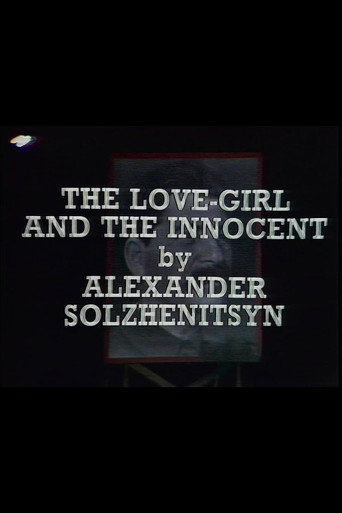
"The Love-Girl and the Innocent" is a poignant 1973 television drama produced by the BBC in the United Kingdom, directed by Alan Clarke. Adapted from the play by Aleksandr Solzhenitsyn, the film delves into the harrowing experiences of Soviet prisoners during the Stalinist era. Set in a Siberian labor camp, the narrative follows the lives of two prisoners, Lyuba and Dmitri, whose burgeoning relationship offers a glimmer of hope amidst the brutal realities of their confinement. The stark portrayal of the camp's harsh conditions, combined with the tender moments between the protagonists, creates a powerful juxtaposition that underscores the resilience of the human spirit. The film's strength lies in its unflinching depiction of the gulag system, a testament to Solzhenitsyn's own experiences and his critique of totalitarian regimes. Alan Clarke's direction masterfully captures the oppressive atmosphere of the camp, using minimalistic sets and a muted color palette to enhance the sense of desolation. The performances of the lead actors, particularly the nuanced portrayal of Lyuba by Gayle Hunnicutt and the earnestness of Dmitri by John Hurt, bring an emotional depth to the story that resonates with viewers. Their chemistry on screen is palpable, making the audience root for their survival and connection despite the overwhelming odds. In addition to its compelling narrative, "The Love-Girl and the Innocent" serves as a historical document, shedding light on a dark chapter of Soviet history that was often shrouded in secrecy. The film's adaptation of Solzhenitsyn's work was particularly significant at a time when his writings were banned in the Soviet Union, making it a bold statement against censorship and oppression. The BBC's decision to produce this drama reflects its commitment to tackling challenging subjects and bringing important stories to a wider audience. The film not only entertains but also educates, offering insights into the human cost of political repression. Overall, "The Love-Girl and the Innocent" remains a powerful and moving piece of television that continues to be relevant today. Its exploration of love and hope in the face of adversity speaks to universal themes that transcend time and place. The film's impact is a testament to the enduring power of storytelling and the importance of remembering and learning from history. As a work of art, it stands as a tribute to the strength of the human spirit and the unbreakable bonds that can form even in the most dire circumstances.
*If our moderation approves your version, it will be replaced and you will be credited as the text author.
Year1973
Runtime127 min
GenresDramaTV Movie
Production countriesUnited Kingdom