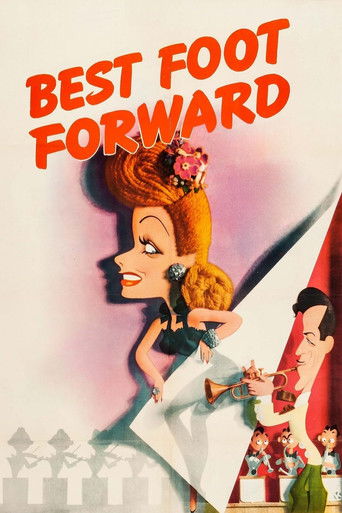
Metro-Goldwyn-Mayer's Honey of a Musical
"Best Foot Forward" (1943), a vibrant musical comedy produced by Metro-Goldwyn-Mayer, captures the essence of wartime America with its spirited portrayal of youthful exuberance and resilience. Set in the fictional Winsocki Military Institute, the film follows the misadventures of a group of cadets who invite a glamorous Hollywood star, Lucille Ball, to their school dance. The plot is a delightful concoction of mistaken identities, comedic mishaps, and lively musical numbers, all woven together with the charm and energy characteristic of the era's cinematic offerings. Directed by Edward Buzzell, "Best Foot Forward" showcases the talents of a young ensemble cast, including Harry James and his orchestra, who add a dynamic musical backdrop to the film's antics. The screenplay, adapted from the Broadway play by John Cecil Holm and George Abbott, maintains the original's humor and heart while infusing it with the cinematic flair of MGM's golden age. The film's dance sequences, choreographed by Charles Walters, are particularly noteworthy, blending seamlessly with the narrative to enhance the overall sense of fun and frivolity. Lucille Ball's performance as herself is a highlight of the film, bringing her trademark wit and charisma to the role of a movie star caught in the whirlwind of a military academy's social scene. Her interactions with the cadets, especially the earnest Bud Hooper played by Tommy Dix, provide much of the film's comedic and emotional core. Ball's ability to navigate the film's blend of slapstick and sentiment underscores her versatility as an actress and adds depth to an otherwise light-hearted romp. "Best Foot Forward" remains a testament to the power of entertainment during challenging times, offering audiences a chance to escape into a world of laughter and music. Its depiction of youthful optimism and camaraderie resonates even today, making it a timeless piece of cinematic history that continues to entertain and inspire. As a product of Metro-Goldwyn-Mayer's illustrious catalog, the film stands as a shining example of the studio's commitment to delivering quality entertainment that uplifts and unites.
Year1943
Budget1162000$
Runtime95 min
Revenue2704000$
GenresComedyMusic
Production countriesUnited States of America