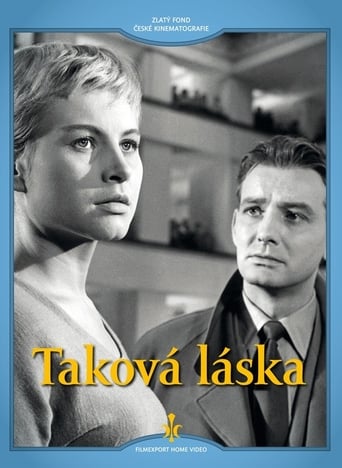
"Taková láska" (1959), produced by Filmové studio Barrandov in Czechoslovakia, is a poignant cinematic exploration of love and resilience set against the backdrop of post-war Prague. Directed by Jiří Sequens, the film delves into the lives of two young lovers, Jirka and Eva, whose relationship is tested by the societal and economic challenges of the time. The narrative captures the essence of youthful optimism and the struggle to maintain personal dreams amidst the harsh realities of a recovering nation. The film's black-and-white aesthetic enhances its emotional depth, drawing viewers into the intimate world of its characters. The performances of the lead actors, Jiří Vala and Jana Brejchová, bring authenticity and warmth to the story, making the audience deeply invested in their journey. Vala's portrayal of Jirka, a hopeful young man with aspirations of becoming an engineer, is both inspiring and heart-wrenching as he navigates the obstacles in his path. Brejchová's Eva is equally compelling, embodying the spirit of a young woman determined to find her place in a changing world. Their chemistry on screen is palpable, adding a layer of realism to the film's romantic narrative. Beyond its romantic core, "Taková láska" also serves as a social commentary on the era, reflecting the struggles of the working class and the impact of political changes on everyday life. The film subtly critiques the bureaucratic hurdles and societal expectations that hinder personal growth and happiness. Through its storytelling, it highlights the resilience of the human spirit and the power of love to overcome adversity. The backdrop of a bustling yet struggling Prague adds a rich layer of context, making the film a time capsule of mid-20th century Czechoslovakia. "Taková láska" remains a timeless piece of Czechoslovak cinema, celebrated for its heartfelt storytelling and its ability to resonate with audiences across generations. Its themes of love, perseverance, and the pursuit of dreams continue to inspire, making it a cherished classic in the annals of film history. The film's enduring appeal lies in its universal message and its honest portrayal of the human experience, ensuring its place as a beloved work of art.
Year1959
Runtime79 min
GenresDrama
Production countriesCzechoslovakia