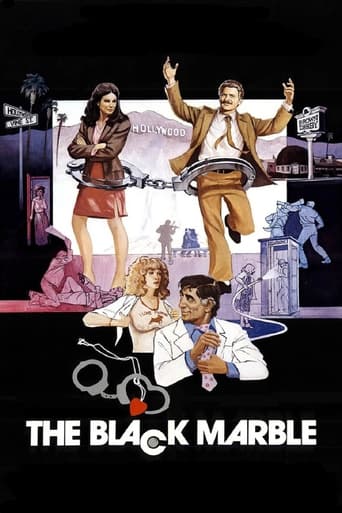
JOSEPH WAMBAUGH'S DONE IT AGAIN. But he has never done it like this.
"The Black Marble" (1980), a film produced by AVCO Embassy Pictures in the United States, is a unique blend of crime drama and dark comedy that captures the essence of Los Angeles in the late 1970s. Directed by Harold Becker and based on the novel by Joseph Wambaugh, the movie follows the unlikely partnership between two contrasting detectives: the hard-boiled, veteran cop Valnikov, played by Robert Foxworth, and the ambitious, by-the-book rookie Natalie Zimmerman, portrayed by Paula Prentiss. Their mission to recover a stolen dog named "The Black Marble" leads them through a series of quirky and dangerous encounters, showcasing the city's underbelly and the eccentric characters that inhabit it. The film's strength lies in its sharp dialogue and the chemistry between the lead characters. Valnikov's world-weary cynicism clashes with Zimmerman's earnest determination, creating a dynamic that is both humorous and poignant. The screenplay, penned by Wambaugh himself, infuses the narrative with authenticity and wit, drawing from his own experiences as a former police officer. This authenticity is further enhanced by the film's gritty portrayal of Los Angeles, from its seedy motels to its opulent mansions, providing a vivid backdrop for the unfolding drama. In addition to its compelling character study, "The Black Marble" offers a satirical look at the absurdity of crime and celebrity culture. The subplot involving a washed-up actor, played with comedic flair by Harry Dean Stanton, adds another layer of humor and social commentary to the film. As the detectives navigate through a world where fame and notoriety often intersect, the movie cleverly critiques the superficiality and excess of the era, making it a timeless piece of cinematic storytelling. Overall, "The Black Marble" stands out as a distinctive film that successfully merges elements of crime, comedy, and social critique. Its engaging plot, memorable performances, and keen observations about human nature and society make it a noteworthy entry in the canon of 1980s cinema. Despite being somewhat overlooked upon its release, the film has since garnered a cult following, appreciated for its originality and the way it captures a specific moment in American cultural history.
Year1980
Runtime110 min
Revenue2500848$
GenresComedyCrimeRomance
Production countriesUnited States of America