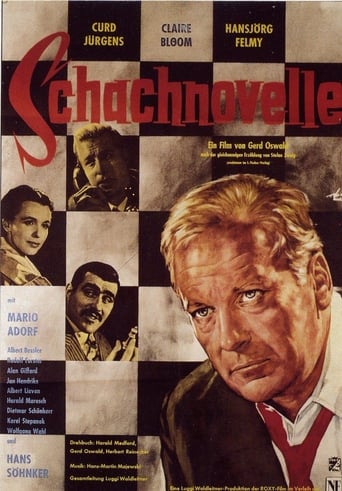
"Schachnovelle" (1960), produced by Roxy Film in Germany, is a cinematic adaptation of Stefan Zweig's poignant novella, "The Royal Game." Directed by Gerd Oswald, the film captures the psychological intensity and existential dread of the original story, set against the backdrop of World War II. The narrative follows Dr. B., portrayed by Curd Jürgens, a Viennese lawyer who, while imprisoned by the Nazis, manages to steal a book on chess. In his solitary confinement, he plays countless games against himself, leading to a profound mental strain that haunts him even after his release. The film's stark black-and-white cinematography enhances the claustrophobic atmosphere of Dr. B.'s confinement and the subsequent tension aboard the ship where he encounters the world chess champion, Mirko Czentovic, played by Mario Adorf. The chess match between the two becomes a gripping metaphor for the battle between intellect and brute force, as well as a reflection of Dr. B.'s internal struggle. The performances are compelling, with Jürgens delivering a nuanced portrayal of a man teetering on the edge of madness, while Adorf's stoic demeanor as the chess prodigy adds to the film's dramatic tension. "Schachnovelle" delves deep into themes of isolation, the human mind's resilience, and the destructive power of totalitarianism. The film's adaptation remains faithful to Zweig's exploration of the psychological effects of solitary confinement and the moral dilemmas faced by individuals under oppressive regimes. The screenplay, penned by Herbert Reinecker, effectively translates the novella's introspective nature into a visual medium, making the audience feel the protagonist's growing paranoia and desperation. Despite its critical acclaim, "Schachnovelle" remains a lesser-known gem of German cinema, perhaps overshadowed by other post-war films. Its relevance, however, endures, as it continues to resonate with contemporary audiences grappling with issues of mental health and the ethical implications of power. Roxy Film's production stands as a testament to the enduring power of Zweig's work and the ability of cinema to explore the darkest corners of the human psyche.
Год1960
Продолжительность102 мин
Жанрыдрама
Страны производстваGermany