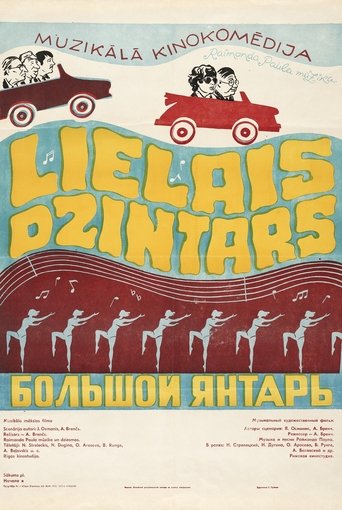
"Lielais dzintars" (The Great Amber), released in 1972 by Rīgas kinostudija, is a poignant Soviet-era film that delves into the complexities of human relationships and moral dilemmas set against the backdrop of Latvia's picturesque landscapes. Directed by Aloizs Brenčs, the film masterfully intertwines the personal struggles of its characters with broader societal issues, reflecting the tensions and aspirations of the time. The narrative centers on a young man's journey to uncover the truth about his father's mysterious past, which leads him to confront the harsh realities of life under Soviet rule. The film's protagonist, Jānis, embarks on a quest that takes him through the amber-rich regions of Latvia, symbolizing the search for clarity and truth amidst the murky waters of political and personal deceit. As Jānis uncovers layers of his father's life, he is forced to grapple with the moral ambiguities that defined his father's choices. The amber, a recurring motif, serves as a metaphor for the hidden truths and the beauty that can be found even in the most challenging circumstances. "Lielais dzintars" is notable for its nuanced portrayal of characters, who are neither wholly good nor entirely bad, but rather complex individuals shaped by their environment and personal histories. The film's cinematography captures the stark beauty of the Latvian countryside, enhancing the emotional depth of the story. The use of amber as a visual and thematic element adds a layer of richness to the film, making it a compelling study of human nature and resilience. Released during a period of relative artistic freedom within the Soviet Union, "Lielais dzintars" stands out as a testament to the creative spirit of Rīgas kinostudija. The film not only provides a window into the socio-political climate of the era but also resonates with universal themes of family, truth, and the human condition, making it a timeless piece of cinematic art.
Год1972
Продолжительность121 мин
Жанрыкомедия
Страны производстваSoviet Union