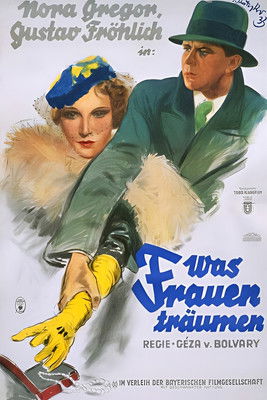
"Was Frauen träumen" (1933), produced by Super-Film GmbH in Germany, is a cinematic gem that delves into the intricate world of women's dreams and desires. Directed by Géza von Bolváry, this film captures the essence of early 1930s German cinema with its blend of romance, drama, and social commentary. The narrative follows the lives of several women, each with their own aspirations and challenges, offering a poignant look at the societal roles and expectations placed upon them during that era. The film's strength lies in its compelling portrayal of female characters, each brought to life with depth and nuance by a talented ensemble cast. From the ambitious young woman yearning for independence to the seasoned matriarch navigating familial duties, "Was Frauen träumen" presents a multifaceted view of womanhood. The performances are both heartfelt and authentic, resonating with audiences who can see reflections of their own dreams and struggles within the characters. Visually, "Was Frauen träumen" is a testament to the artistic prowess of the time. The film's cinematography, characterized by its meticulous attention to detail and atmospheric lighting, enhances the storytelling, drawing viewers into the intimate spaces where dreams are both nurtured and shattered. The use of soft focus and shadow play adds a layer of dreamlike quality, perfectly complementing the film's thematic exploration of the subconscious. In the context of 1933 Germany, "Was Frauen träumen" also subtly critiques the societal norms and gender roles of the period. While not overtly political, the film's narrative threads weave a tapestry of quiet resistance against the constraints imposed on women. By showcasing their inner lives and aspirations, "Was Frauen träumen" invites viewers to reflect on the universal quest for personal fulfillment and the timeless nature of women's dreams.
Год1933
Продолжительность81 мин
Жанрыкомедиядетектив
Страны производстваGermany