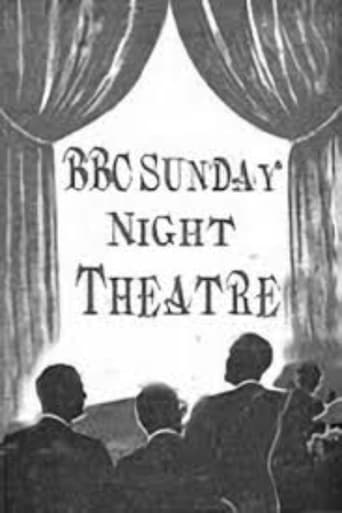
Sunday Night Theatre was a long-running series of televised live television plays screened by BBC Television from early 1950 until 1959. The productions for the first five years or so of the run were re-staged live the following Thursday, partly because of technical limitations in this era, and the theatrical basis of early television drama. Some of the earliest collaborations between Rudolph Cartier and Nigel Neale were produced for this series, including Arrow to the Heart and Nineteen Eighty-Four. The Sunday night drama slot was subsequently renamed The Sunday-Night Play which ran for four seasons between 1960 and 1963. ITV transmitted its own unrelated run of Sunday Night Theatre between 1971 and 1974.
Sunday Night Theatre (Season 3)
The Prisoner (Episode 1)
Writer: Andrew Cruickshank
Air date: 1952-02-10
The Wanderer (Episode 2)
Air date: 1952-02-24
The Wild Duck (Episode 3)
Air date: 1952-03-02
Overview: A loving family's world is shattered by an old friend's arrival, carrying a dark secret.
Dial M for Murder (Episode 4)
Air date: 1952-03-23
Overview: A London businessman concocts an intricate plan to murder his unfaithful wife for her money.
Mourning Becomes Elektra (Episode 5)
Air date: 1952-03-30
Love and Mr. Lewisham (Episode 6)
Air date: 1952-05-04
Martine (Episode 7)
Air date: 1952-05-11
Arrow to the Heart (I) (Episode 8)
Air date: 1952-07-20
Her Royal Highness (Episode 9)
Air date: 1952-08-03
The Same Sky (Episode 10)
Air date: 1952-08-10
Overview: The theme of Romeo and Juliet reworked in an orthodox Jewish household where Jeff who is a Christian falls in love with Juliet. Both families bitterly oppose the relationship. The story is set in wartime, in the East End of London.
Strange Orchestra (Episode 11)
Air date: 1952-10-05
The Merry Wives of Windsor (Episode 12)
Air date: 1952-11-16
No Cross, No Crown (Episode 13)
Air date: 1952-11-23