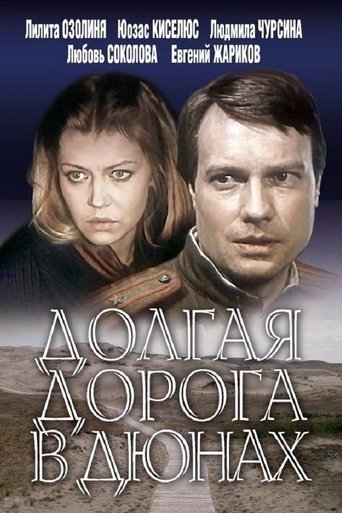
"Долгая дорога в дюнах" (1982), produced by Rīgas kinostudija in the Soviet Union, is a poignant cinematic exploration of love, duty, and the inexorable passage of time. Directed by Aloizs Brenčs, the film unfolds against the backdrop of the Latvian coastline, where the undulating dunes serve as a metaphor for the shifting sands of human relationships. The narrative follows Marta, a young woman who returns to her seaside village after years away, only to find herself torn between her past love, Artūrs, and her new life. The film's evocative setting and the emotional depth of its characters make it a compelling study of personal and societal transformation. The film's visual language is as compelling as its narrative, with the stark beauty of the Latvian landscape providing a haunting counterpoint to the characters' internal struggles. Cinematographer Harijs Kukels masterfully captures the interplay of light and shadow on the dunes, creating a sense of both isolation and connection. The use of natural elements, such as the sea and the wind, enhances the film's atmosphere, drawing viewers into the emotional landscape of the characters. This visual storytelling is complemented by a subtle yet powerful score by Raimonds Pauls, which underscores the film's themes of longing and resilience. At its core, "Долгая дорога в дюнах" is a meditation on the complexities of human relationships and the impact of historical and social changes on individual lives. The film deftly navigates the tensions between personal desires and societal expectations, particularly through the character of Marta, who must reconcile her past with her present. The performances by Vija Artmane as Marta and Uldis Pūcītis as Artūrs are nuanced and heartfelt, bringing authenticity to their characters' emotional journeys. The film's exploration of these themes resonates with audiences, offering a universal reflection on the nature of love and the passage of time. "Долгая дорога в дюнах" stands as a testament to the artistic achievements of Rīgas kinostudija during the Soviet era. Its enduring appeal lies in its ability to weave a deeply personal story with broader social commentary, making it a significant work in the canon of Soviet cinema. The film's sensitive portrayal of human emotions, combined with its stunning visual and auditory elements, ensures its place as a timeless piece of cinematic art that continues to captivate and inspire viewers.
年份1982
集数7
季数1
集时长
状态Ended
类型剧情War & Politics
制作国家Soviet Union